Dubai
The best places to visit in the city of Dubai.
Movida Club
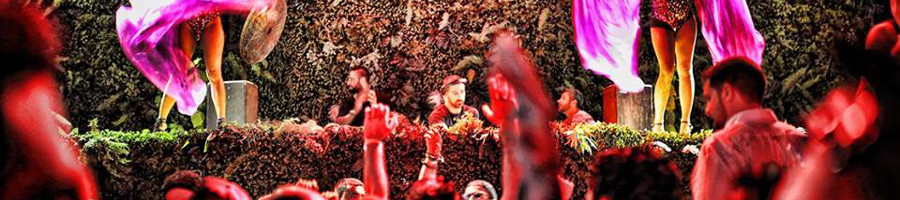
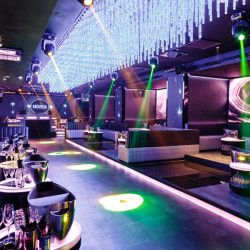
Movida nightclub is located in the five-star Nassima Royal Hotel set against the great back drop of the Sheikh Zayed Road. Movida recently underwent a complete redesign and rebranding setting new standards in the entertainment industry. A lot of priority is given to the wishes of the trendy clients and this decision was factored in its design, lush interior, LED screens, state-of-the-art sound- and lighting systems. There are five dance floors, two bars, several VIP tables and an exclusive members only private room. The mantra of see and be seen is especially applicable to the raised and luxurious VIP area.
The club is also known to receive many celebrities like Drake, Justin Bieber and Lil’ Wayne and is a beacon of the Dubai nightlife.There is a variety of genres of music played at the club as it receives international guest deejays as well as live performing artists and bands. So if you just like one music genre it is advised to select your evening wisely. Movida has no strict door policy and dress code, but arriving in a mixed group and looking fashionable is advised.
Al Bastakiya quarter (old Dubai)
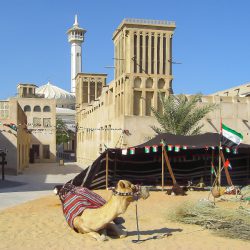
The official name of the historical neighborhood Al Bastakia is Al Fahidi and it is located between the Creek and the Al Fahidi Roundabout. The history of of this neighborhood dates back to approximately the end of the 19th century when traders from Bastak, Iran came here to work and live.
The houses have characteristic Persian-influenced wind towers, or windcatchers, which are called Baarjiil in Arabic. Because of a clever system these wind towers function as a natural air-conditioning.
In the 1970’s the neighborhood went into decline, because families left to new and modern homes in other parts of Dubai. As a result of this decline the neighborhood was partly destroyed in the 1980’s to make room for office buildings. In 1989 were plans to demolish the whole neighborhood, but the British architect Rayner Otter started a campaign to preserve the remaining part of the neighborhood and succeeded. In 2005 the Dubai municipality restored the buildings and houses very carefully and made the neighborhood a must-see.
The neighborhood has still its narrow, traffic-free and quiet labyrinthine lanes and about 50 nicely restored sand-coloured merchant houses. In these houses don’t live merchants anymore but are nowadays used as boutique hotels, cafés, craft shops, cultural exhibits and art galleries.
In the Al Bastakia quarter is also the Al Fahidi Fort, which is constructed in 1787 and houses the Dubai Museum.
Dubai Frame
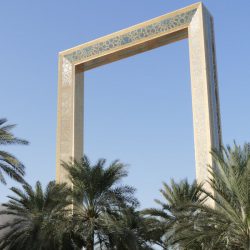
The Dubai Frame is one of the most iconic and biggest architectural landmarks of Dubai. The Dubai Frame is modeled after a massive golden frame of a painting, which gives it its unique look. Towering over the city at an impressive height of 150 meters it gives a great panoramic view over the city. So if you are in Dubai you might as well enter it.
This iconic building symbolizes a connection between the past and the present of Dubai, which you will get to experience in a very concrete way when you stand on the top floor of the building. One side of the building gives you a stunning view over modern Dubai, as you overlook Sheikh Zayed Road, the Burj Khalifa and the other skyscrapers of Dubai which give you an impression of the bright future of Dubai. While the windows on the other side of the monument give an amazing view over Old Dubai, the Dubai Creek and even Deira, where you can appreciate the traditional beauty of the city.
When you enter the Dubai Frame you enter on the bottom floor you enter a museum following the same theme as this monument itself: how the culture and identity of the city developed over time, with a focus on it’s traditional elements. While the bottom floor focuses on old Dubai, the top floor contains contrasting presentations about modern Dubai. You will learn the story of how Dubai developed from a fisher’s village to the global city it is today. As you head to the top floor to walk over the gigantic bridge you will notice the walls and floors contain lots of glass, giving you a great panoramic view of the city.
If you want to create some memories and take home pictures of the skyline of Dubai, then you will find that the centrally located Dubai Frame is one of the best places to visit in Dubai. The tickets to visit this amazing place are quite limited though, so it’s strongly recommended to book in advance.
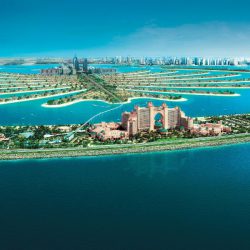
Palm Jumeirah
Palm Jumeirah is an enormous artificial island with the shape of a palm tree and is located in the Persian Gulf in front of the Dubai Jumeirah coastal area. This island is created using land reclamation and is constructed from only natural materials like sand and rocks. The palm tree island is about 5 km (3 mi) by 5 km (3 mi), has a trunk of about 2 km (1,2 mi) long, 16 palm leafs and a circular breakwater of 11 (7 mi) km long. With this island the coastline of Dubai has increased with 78 km (48 mi). It is the first of the three planned palm islands. The other two planned islands are called Palm Jebel Ali and Palm Deira, but because of the 2008-2010 financial crisis is Palm Jebel Ali still under construction and is Palm Deira revised to Deira Island.
The construction of Palm Jumeirah wasn’t without problems. One of the large problems was the absence of natural tidal movement because of the design of the island and its breakwater. This led to smelly beaches and wide growth of algae. Now that they have made a wide gap of 100 m (328 ft) at either side of the breakwater, the problem seems to be solved.
Nowadays are on every leaf of the palm gated communities with villas that are worth millions. On the trunk is a marina where the yachts are and the hotels and resorts are spread over the trunk and the breakwater.
The road on the trunk goes from its foot up to its top. If you drive to furthest point of the trunk there is a subterranean tunnel which goes beneath the Gulf to come up again at Atlantis the Palm Hotel on the breakwater. From the the foot of the trunk at Gateway Towers station goes a high and impressive driverless monorail all the way up to Atlantis the Palm Hotel at the breakwater. If you want to visit Palm Jumeirah and take the monorail it is possible to go there with the the red line of the Dubai metro, which has a station at the foot of the trunk. And if you want to go by car it is possible to park the car in the garage at the Dubai coast in front of the foot of the trunk.
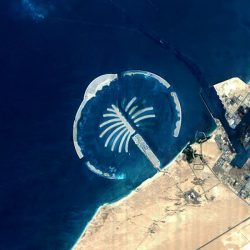
Palm Jebel Ali
Palm Jebel Ali is the second island of the originally three planned artificial palm islands. The construction of the island started in 2002, the breakwater was completed in 2006 and the infrastructural work started in 2007. Nowadays the project is still under construction, because several constructions were suspended, or delayed after the financial crisis of 2008-2010. The plans are that Palm Jebel Ali will become 50% larger than the already finished Palm Jumeirah and will house over 250.000 people. On the island will arise several theme parks of which the first one should be completed in 2021. In 2015 the Dubai government owned developer Nakheel announced that further development of the project must be seen in the long-run depending on the market conditions.
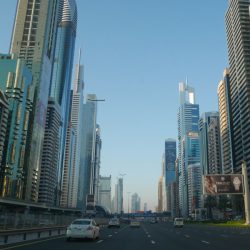
Sheikh Zayed Road
The Sheikh Zayed Road is the main highway in Dubai and is part of the E11. The E11 is the longest road in the United Arab Emirates and stretches from the city of Al-Silah in Abu Dhabi via Dubai and the Ras al-Khaimah emirate to the border of Oman. The E11 has different names in different emirates so is the part in Abu Dhabi called Sheikh Maktoum Road, the part in Ras al-Khaimah is called Sheikh Muhammad bin Salem Road and the part in Dubai is called Sheikh Zayed Road. The highway runs roughly parallel to the coastline of Dubai and has in each direction seven to eight lanes. The construction of this highway project began in 1971 and was initially completed in 1980 as Defence Road, but in the period between 1993 and 1998 the road was increased with an additional 30 km (19 mi) and got its current name Sheikh Zayed Road.
Sheikh Zayed Road is known for its stunning views with skyscrapers on both sides of the road. Some skyscrapers are more famous than others, but it are i.e. Emirates Office Tower, The Tower, the World Trade Centre, Ahmed Abdul Rahim Al Attar Tower, Millenium Tower, Latifa Towers, The Sama Tower, Al Yaqoub Tower, Chelsea Tower, Rolex Tower and many more.
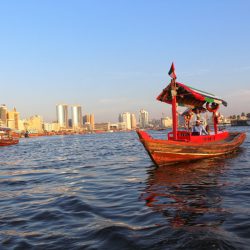
The Dubai Creek / Khor Dubai
Just like the Seine divides Paris and the Thames divides London, the 14 km (8,7 mi) long river The Creek divides the city of Dubai in two parts. In the times of the ancient Greeks the river was called Zara, and started at the coast from the Persian Gulf and ended in Al Ain. Nowadays is The Creek also known as Khor Dubai, because it used to end in the Ras Al Khor Wildlife Sanctuary where flamingos and other beautiful birds live. This slow flowing saltwater creek was the commercial backbone of the city and in the early 20th century it was the place where local pearl divers and fishermen worked daily. In this period they also built a small port from where the traditional sailing vessels, called dhows, sailed to India and East-Africa. The Creek was dredged in the 1960s and 1970s so that larger ships could sail the river and give Dubai its advantage over neighboring Sharjah. In 2007 the river is extended 2,2 km (1,4 mi) from Ras Al Khor to Business Bay district. Another extension of about 3 km (1,9 mi) has started in 2013 which will link The Creek again with the Persian Gulf.
If you want to cross The Creek you could take the Al Shindagha Tunnel, which is is the only underwater road crossing Dubai Creek, one of the four bridges, or the Metro lines. But we from Meet The Cities like to make use of an motorised open wooden water taxi called abra, because from the water it is very beautiful to watch the modern highrise at Deira, the historical neighborhood Bastakiya and Bur Dubai. These abras cross the rivers leave when there are enough passengers on board. Most of the times this only takes several minutes. The travel across the river will take about 5 to 7 minutes and costs Dh1, cash only.
The most popular routes are at the following abra stations:
– From Deira Old Souk Abra Station (near the Spice souk) to Bur Dubai Abra Station (near Bur Dubai Souk)
– From Sabkha Abra Station (near Baniyas square) to Dubai Old Souk Abra Station (near Bur Dubai Souk)
The World Islands
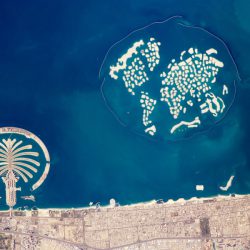
The World Islands, or The World, are 300 artificial islands shaped in the form of a world map. These islands are located in the Persian Gulf in front of Jumeirah beach at about 4 km (2,5 mi) from the coast. It is the largest dredging project in progress on the planet. The size of the islands are between 14.000 and 42.000 m2 (150.000 and 450.000 sq.ft.), the distance between the islands is on average 100 meters (330 ft) and have created about 232 km (144 mi) of shoreline. In total this mega project covers an area of about 6 by 9 km (3,7 by 5,6 mi). The islands themselves are surrounded by an breakwater island and are mainly constructed out of rocks and sand.
The construction of the islands began in 2003. In 2008 about 60% of the islands were already sold, but due to the 2008-2010 financial crisis the project was suspended. The financial crisis was unfortunately not the only problem of this mega project. There are also discussions going on between developers and investors about erosion of the islands, boat transportation rights, the supply of utilities like water and electricity and the silting of the navigational channels between the islands. But the good news is that the property prices have been rising again after the financial crisis. And since the beginning of 2016 it seems that the developments of the project Heart of Europe (which includes the islands of Germany, Main Europe, Monaco, Saint Petersburg, Sweden and Switzerland) have proceeded again. At this moment are two islands finished. These are Lebanon which has much commercial development like restaurants, a beach club and bars and Greenland which is a private island and used as a showpiece.
Dhow wharfage
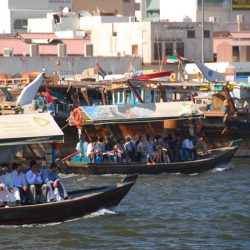
In the Dhow wharfage you will get an impression of the long trading history of Dubai. This makes it different from the other mostly modern sightseeing tips. In the wharfage it seems like you went decades back in time. Even up to today the sailors and merchants of the numerous dhows are loading and unloading their goods still by hand, because of the absence of cranes in the Dhow wharfage. The brightly coloured dhows are traditional Arabic flat wooden cargo boats which are still used by the Arabic sailors and merchants. Since the 1830s these boats come to the free-trade port of Dubai from the countries around the Indian Ocean and the Persian Gulf. On these boats are all kinds of goods shipped like fabrics, electronics, furniture and foods. We from Meet The Cities have experienced that some of the sailors are really friendly, do speak English and are open for a chat about their sailing trips. So our advise is to easily stroll through the wharfage, enjoy all the activity and make time to take some pictures. You could also take an abra water taxi to make pictures from the waterside. The Dhow wharfage is located on the shore of the The Creek in the Deira area just north of the Maktoum Bridge along Baniyas Road.
When you make use of the public transport you could take the red line of Dubai Metro to station Al Rigga or station Deira City Centre Metro Station 2. If you prefer the bus you could go to the bus stops Maktoum Road 1 or Maktoum Road 2.
Dubai Fountain
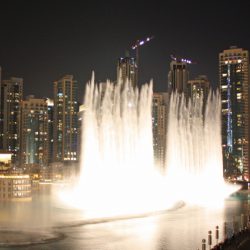
The Dubai Fountain is 275 m (902 ft) long and is located in the Burj Khalifa lake behind the impressive Burj Khalifa and right outside the Dubai Mall. During the show over 83.000 liters (22.000 gallons) of water dances choreographic through the lake and into the sky with heights of an impressive 152 m (500 ft). This makes it the largest dancing fountain in the world. It seems that the beam of light that comes from the 6.600 fountain lights and 25 colored projectors make it the brightest spot in the Middle East and could even be seen from space. The beautiful guiding music from different ages and parts of the world makes this spectacular complete. It will not be a surprise that the costs of constructing this fountain are extremely high. The costs are estimated at the astonishing amount of AED 800 million (USD 218 million) which makes it the most expensive fountain show in the world.
This fountain how has fortunately no entry fees and is totally free. There are enough spots from where you have a great view, like on the Souk Al Bahar bridge, several restaurants at Souk Al Bahar and the whole lake promenade behind the Dubai Mall. From the observation decks of the Burj Khalifa you could also get a great view on the Dubai Fountain, but the these views aren’t free.
Some of the restaurants we picked offer a great view overlooking the fountain. So it can be fun to reserve a spot there.
Burj Al Arab
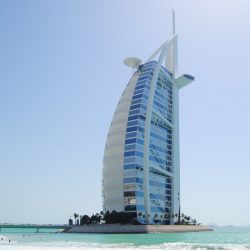
The Burj Al Arab, which means Arabic Tower, is an absolute iconic landmark in Dubai and probably the most luxurious hotel in the world. It is one of the few hotels in the world that are considered a 7-star hotel. The hotel floats on an artificial island in the Persian Gulf 300 m (984 ft) from the Dubai shore. Referring to the importance of ships in Dubai, the design of the structure mimics the sail of a dhow (which is a traditional wooden Arabic cargo vessel). The height of the hotel is 321 m (1.053 ft) and its 202 suites vary in size between 169 and 780 sq m (1.819 and 8.396 sq ft). The total costs of the Burj Al Arab are estimated at AED 4,4 billion (USD 1,2 billion).
When the hotel opened its doors in 1999 it put Dubai on the map as a luxury travel destination. For those who can afford it has the hotel a helipad and a fleet of Rolls Royce limousines. The gorgeous lobby has an abundance of gold-leaf and marvelous fountain with a height of 30 m (98 ft). In the hotel are several restaurants, one of them is restaurant Al Mahara and is famous for having an enormous fish tank. On the 27th floor is restaurant Al Muntaha and the Skyview Bar which have stunning views over the Persian Gulf. At the Skybar you can get delicious cocktails or the popular afternoon tea.
Seen from the sea the metal construction of the Burj Al Arab with its Skybar have the shape of a cross. This cross is so immense that it probably is one of the largest in the world. At the time that they discovered this aspect the building was already such an iconic landmark for Dubai that they wouldn’t change it anymore.
If you don’t stay at the hotel, but want to get past the lobby. We from Meet The Cities recommend to make a reservation in a bar or restaurant in the Burj Al Arab where you can make your expenses as low (note the minimum spend) or as high as you want.
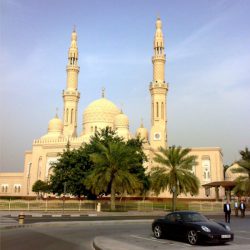
Jumeirah mosque
The Jumeirah mosque is located in the beach area of Jumeirah. According to many is this the most beautiful mosque in Dubai because of its exterior and the many details that are incorporated in it. The ivory-/sand colored structure looks especially in the evening very magical when the lights shine on it. It is the largest mosque of Dubai where 1200 believers can pray together. The dome building has two 70 m (230 ft) high minarets. The construction of the mosque began in 1976 and opened its doors in the late 1970’s. The prayer niche, in Arabic mihrab, is directed towards Mecca. Non-muslims aren’t allowed in the mosques in Dubai, but for the Jumeirah mosque has been made an exception. They can follow a tour through the mosque via the Sheikh Mohammed Centre for Cultural Understanding which try to get non-muslims more acquainted with Islam. When you participate in the tour you have to remind that men and women need to be dressed conservative, like long trousers for men and covered head, arms and legs for women. If necessary traditional clothing can be borrowed. The shoes need to be taken off at the entrance of the mosque and could be stored in shoe cabinets. There is no metro station nearby, but several bus lines pass near the mosque.
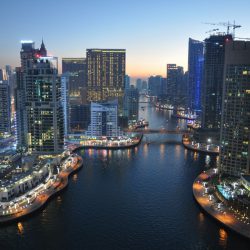
Dubai Marina Walk
Dubai Marina is the name of the modern district surrounding the man-made marina with its boats, yachts and dhows. Because of the open connection between the marina and the Persian Gulf marine wildlife (even sharks and whales) could be spotted in the marina lake. It is possible to book boat trips in Dubai Marina for example with a traditional dhow, abra or a speedboat. During such a boat trip you could see the district with its ports, its 200+ skyscrapers and other fascinating buildings from the waterside. These boat trips go also to the Persian Gulf and to Jumeirah Beach Residences (JBR) and The Walk.
But the district has also the Dubai Marina Mall and an entertaining boulevard, called the Dubai Marina Walk. At this boulevard you can find restaurants, cafes, recreation, comfort, luxury, shops and entertainment.The boulevard is a whopping 7 km (4,6 mi) long and offers the perfect way for discovering Dubai Marina or taking a evening stroll.
If you have rented a car you could park your car in the several parking garages near the different areas of the boulevard. But at Friday and Saturday it could be very busy, so especially at these evenings it would be wise to make use of the public transport.
To get to Dubai Marina Walk by public transport you could take:
The red line of Dubai Metro to the station at Dubai Marina called DAMAC Properties.
Tramline T1 of Dubai Tram and stop at Marina Towers or Dubai Marina.
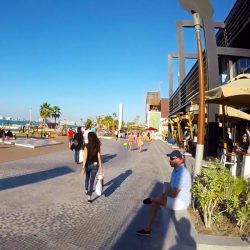
JBR The Walk
JBR The Walk, or The Walk, is a 1,7 km (2 mi) long boulevard located along the beach of Jumeirah Beach Residence (JBR). JBR is a very recognizable area because of the many sand-colored buildings and the presence of its beach with facilities like changing rooms and showers. The Walk is paved and has palm trees and other tropical plants on both sides.
It is no wonder why it is a very popular spot for tourists because it is outdoor in a city full of indoor shopping malls and the fact that it has many Arabic- and western style hotels, shops, bars and restaurants. Also the presence of outdoor art exhibitions, sand sculptures, comedy shows and the booths make it an attractive place for an evening stroll. It is also the place for watching people and being watched. Many tourists as well as Arab women are dressed according to the latest fashion trends. It is also the place where locals drive slowly over the boulevard to show their expensive cars from brands like Rolls Royce, Bentley, Lamborghini and Ferrari.
The recent expansion of the area with the project The Beach has made The Walk and its surrounding even more attractive, especially because of its restaurants and shops with stunning views over the beach and the Persian Gulf. In front of the JBR has the construction of the artificial island Bluewaters Island begun which will host the largest ferris wheel wheel in the world, the 210 m (689 ft) high Dubai Eye. Walking through this area makes an impressive citysperience.
If you have rented a car it possible to park it in the underground garage that is accessible from Al Gharbi Street. Another option is to park in the parking bay in the Murjan towers. Parking on-street is also an option, but could be a challenge.
We from Meet The Cities recommend to go by public transport to JBR The Walk.
Options that could be considered are:
– The red line of Dubai Metro to station Jumeirah Lake Towers, which is the closest to JBR The Walk, or station DAMAC Properties.
– Tramline T1 of and stop at Jumeirah Beach Residence 1 or Jumeirah Beach Residence 2.
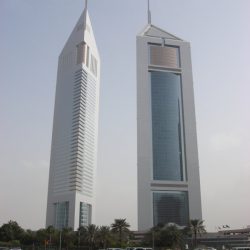
Emirates towers
The Emirates Towers are real icons for the city of Dubai and are located on the Sheikh Zayed Road. It is a building complex with a two-storey retail complex called Emirates Towers Shopping Boulevard which connects the two well-known towers. These two towers are the Emirates Office Tower with a height of 355 m (1,165 ft) and the Jumeirah Emirates Towers Hotel with a height of 309 m (1,014 ft). This makes the Jumeirah Emirates Towers Hotel one of the highest hotels in the world. On the 50th and 51st floor are restaurants and bars with spectacular views over Dubai. Remarkable is that the larger Emirates Office Tower has 54 floors, while the smaller Jumeirah Emirates Towers Hotel has 56 floors.
When you go by car you could park in one of the 1.800 parking spaces of the complex, of which are 1.000 parking spaces in the garage below the Emirates Towers Shopping Boulevard. If you want to make use of the public transport you could go with the red line of Dubai Metro to the Emirates Towers Metro Station.
Cayan Tower
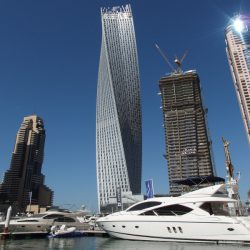
The Cayan Tower is a luxury residential skyscraper with 495 apartments. It is located at the beginning of the Marina Walk next to the Dubai Marina bridge. Because of its 90-degree twist the tower stands out between the other skyscrapers. This design was inspired by The Turning Torso building in Malmö Sweden. The Cayan Tower is a 73 story building and is 306 m (1.004 ft) high which makes it the tallest building in the world with a 90-degree twist. This twist is created by rotating each floor 1,2 degrees from the floor below. Because of this twist the residents of the lower floors have a view on the Dubai Marina lake and the residents of the higher floors have a view on the Persian Gulf. An advantage of the twist is that it reduces wind force on the building. Upon its completion the tower was named Infinity Tower, but because there are multiple towers in the world with the name Infinity the tower was renamed to Cayan Tower. The construction of the Cayan Tower started in 2006 and was completed in 2013. It was because of the 2008-2010 financial crisis and several construction problems that it took 7 years to complete this impressive skyscraper.
Helicopter flight in Dubai
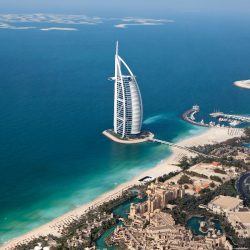
Dubai is known for its iconic skyscraper rich skyline and record breaking architecture. Enjoying the Palm Islands from the air is something few people get to experience. But this once in a lifetime experience is actually available to everyone with the ambition to see these modern wonders. Taking a helicopter tour in Dubai is one of the most memorable experiences you can take home from Dubai. The aerial view is truly stunning and unique on this planet so taking a helicopter flight is truly one of the best things to do in Dubai.

History of Dubai
Dubai has been blessed with a relatively calm history. There are archeological clues that 3000 years before Christ nomadic tribes lived in Dubai. Around 2500 BCE agriculture began to spring as people began growing plants like date palms. In the 6th century people in Dubai lived of fishing and pearl diving. And Dubai began to develop itself as a trade route for caravans. In the centuries after the Islam was introduced in the region and the pearl trade industry was booming.
In the 19th century the Bani Yas tribe led by the still ruling Al Maktoum family settled at the creek of Dubai. The creek became a successful international port and set the stage for the success of modern day Dubai. Even back in the day Dubai was famous in the region for its pearls and large markets. In 1892 Dubai became a British protectorate which came with assistance with the stability of the region and economic benefits attracting lots of expats to Dubai.
In the western world Dubai is known as an oil state, although it has an increasingly diverse economy at the present. It has gotten this reputation due to the finding of oil in the late 1960’s. Using smart leadership the profits were used to fund infrastructure, education, healthcare, a friendly tax climate, the Jebel Ali port, the international airfield and other projects benefiting its citizens and economy, enabling Dubai to truly start shining. Tourists took notice of this fresh and exotic haven as Dubai’s popularity grew. In the middle of all this growth the United Arab Emirates was formed by Dubai and it’s neighbouring emirates. The city blossomed.
In the late 80’s and continuing on today Dubai kept investing in tourism, a friendly and diverse business climate and ambitious mega projects unrivalled in the world. The creation of the world’s tallest building in the world, the creation it’s signature palm Islands and luxury malls that function as entertainment centers. And Dubai keeps getting better and better every year.
That’s Dubai in a nutshell. Dubai is the embodiment of entrepreneurship and is constantly reinventing itself. And the best way to honor Dubai’s past is to celebrate it’s fruits today.
Wild Wadi Water Park
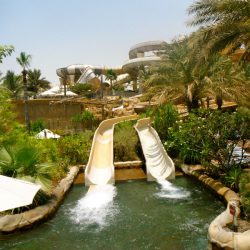
Wild Wadi Water Park is a large water park that has great attractions suitable for the whole family. It has a vast array of around 30 slides, so there is something for everyone. The park has a “one thousand and one nights” theme build around the traditional folklore stories of “Juha and Sinbad the Sailor”. For children and adults it has relaxing water slides under the careful watch of abundant lifeguards that are always willing to lend a hand. But there are also attractions like wipeout for the people who wish for a surfing experience. Some of the cooler attractions of the park are slides where you sit on a swim tube and go downhill in a bobsled-like fashion. For the real thrill seekers there are attractions like the super scary Jumeirah Sceirah, which is a 120 meters long slide where you stand in a tube, and then the floor opens up as you experience a free-fall slide at 80 km/h. So it caters to both daring swimmers and relaxing swimmers.
The park is located in Jumeirah in front of the Burj Al Arab and at higher up slides offers great views of the area. Entrance to the park is free for guests of many Jumeirah hotels, so if you stay there do ask your hotel about it because you might be in luck. This water park certainly is one of our favorite places in Dubai and strongly recommended.
Aquaventure Waterpark
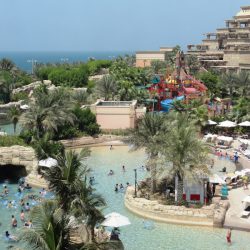
The biggest water park in the Middle East is the Aquaventure Water Park. The park has leisure pools where you can spend your days relaxing and a private white beach for it’s guests. But there are plenty of water slides as well. To give you an impression: you can get on a swim tube and head down the rapids, which is an exciting 1,6 kilometers long rapid water slide. Or climb the Tower of Poseidon where you can find the world’s largest waterslide, the Aquaconda. You can also race against a buddy down a double barrel waterslide. Another water slide passes through an aquarium of real sharks. The park also has a children’s play area called Splashers, which contains water cannons, smaller slides for children and climbing frames. And there is plenty more to discover so you’ll surely have a great time.
The Aquaventure Waterpark also has some additional attractions which can be done for a fee. You can go on Shark Safari where you get an underwater breathing helmet and can walk among pretty fish and sharps underwater. At the Lost Chambers Aquarium you can find over 65000 sea animals like sharks, stingrays and alligators which you can view behind huge glass windows. For our action heroes the park has the longest zip line in the middle east. And next to the park is Dolphin Bay, where you can book a ticket to swim with dolphins.
The park can be found on Palm Jumeirah and is located next to the impressive Atlantis Hotel. Standing on top of the higher attractions at this premium location guarantees an impressive skyline. Additionally, people who stay at the Atlantis hotel also get free access to the park.
Middle Eastern restaurants
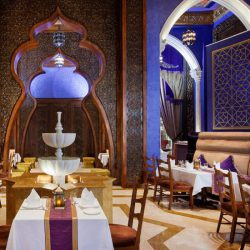
Al Nafoorah
Al Nafoorah is considered one of the best lebanese restaurants of Dubai. It is located in Jumeirah Zabeel Saray on the The Palm Jumeirah. Inside it looks like a traditional arabic atmosphere fit for a king, with a high ceiling and beautifully decorated walls. The restaurant offers generous portions of traditional lebanese food. And it has a friendly staff that’s more than willing to help you. When you are in Dubai and wish to taste some exotic quality foods you’ll be in good hands here.
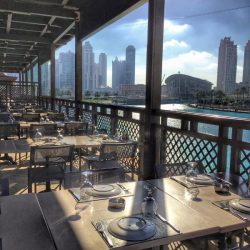
Abd Al Wahab
The restaurant Abd Al Wahab serves the rich lebanese cuisine with for example traditional mezze and tasty grilled lamb with exotic spices. The restaurant has a terrace with front row seats overlooking the Dubai Fountain and the Burj Khalifa. Both the view of the fountain show and the great atmosphere make it a very memorable place to dine.
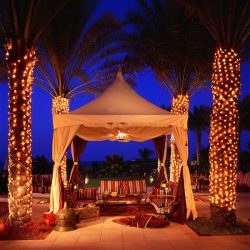
Amaseena
Amaseena is a restaurant that’s entirely arab-themed. It’s an outdoor restaurant with a nice beach view near the Palm Jumeirah, located in the Ritz-Carlton hotel. You can find delicious variations on traditional arabic food, which in Dubai consists of lamb chops, salmon, quality desserts, salads and other delicacies. It has a delightful ambiance as you eat your meal in Bedouin tents while enjoying live music and even belly dancers. This restaurant is one of our guilty pleasures.
Asian restaurants
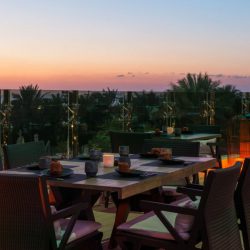
Zengo
Zengo is a Japanese restaurant, but has a wide variety of dishes. It caters to every taste with dishes like sushi, sashimi, shrimp tempura, salmon, wok dishes, lamb and beautifully charcoal grilled food like spare ribs. The restaurant has a sleek and luxurious feel to it yet retains a certain comfortable charm. The restaurant has a great view over palm trees and the gulf from both inside and the rooftop terrace, with it’s own terrace bar, where you can dine under the romantic starry sky. The restaurant is in a prime location at JBR next to the Palm Jumeirah, inside of the Le Royal Meridien Beach Resort & Spa. The restaurant is very suitable for romantic dinners with your partner.
Zheng He’s
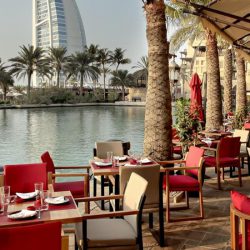
Zheng He’s is an authentic Chinese waterside restaurant, where you can get an aromatic rich pallet of flavour from Dim Sums, noodles, Beijing Duck, Kung Pao Chicken, beef and more in generous portions. Inside the restaurant has a delightful positive vibe, while outside it has a terrace where you can dine with a charming view over the canals of Jumeirah, palm trees and the Burj Al Arab. The restaurant is behind the Souk Madinat so it’s a great place to sit down and dine after a long day of shopping.
Pai Thai
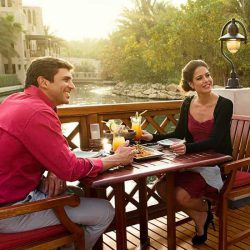
Pai Thai is an authentic waterside Thai Restaurant, where you can get for example wokked dishes with tender smoked duck, fried prawns, chicken curry, marinated beef and mussels. To set the mood you can get brought to the restaurant by a traditional abra boat ride over the canals of Jumeirah. The restaurant has a warm Asian theme to it, but it also has a waterside terrace where you’ll be surrounded by the canals and beautiful characteristic Dubaian wind towers that define Jumeirah. This restaurant is family friendly and located near Souk Madinat.
Steakhouses
Asado
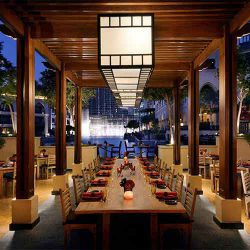
Asado is a vibrant Argentinian grill restaurant, which means it offers mouthwatering dishes for every who can appreciate a perfectly juicy beef steak from an open grill, seabass, goat and other delicate meats. The restaurant also prides itself for its wide array of Argentinian beverages. Indoors the restaurant has an informal and cozy vibe to it carrying the Argentinian spirit, while outside you can enjoy a background of the Dubai fountains and the Burj Khalifa.
Prime 68 Steakhouse
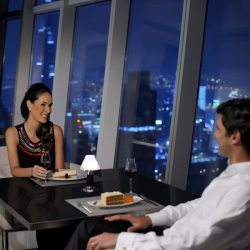
Prime 68 is an American Steakhouse offering divine steaks of premium cuts. The service in the restaurant is also excellent with a friendly and helpful staff. The restaurant itself has a modern and luxurious feel to it. One of the most distinct features of this restaurant is that it’s on the 68th floor of the JW Marriott Marquis Hotel Dubai. It offers a spectacular skyline and top view over the city, which is one of the reasons why we certainly recommend a visit. The restaurant is especially well suited for romantic dinners.

Chamas Churrascaria and Bar
Chamas Churrascaria and Bar is a Brazilian grill restaurant. People who enjoy marinated skewered meat with lamb, beef and chicken can enjoy the authentic flavours of Brazil here. The restaurant creates a friendly, warm and intimate atmosphere in this paradise for meat enthusiasts. Having dinner here with live latin music makes a satisfying experience and a delicious evening.
Seafood restaurants
Pierchic
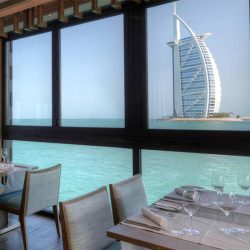
Pierchic is an exclusive Mediterranean seafood restaurant and they aren’t afraid to show it. It can be reached by walking down pier off the coast of Madinat Jumeirah . The picturesque restaurant is on the ocean surrounded by water and has an impressive view of the coastline of Dubai. The menu is filled with seafood classics, like poached lobster, oysters, caviar, sea bass, but also with for example wagyu beef. It’s quite magical to enjoy a dinner at sunset here.
Al Hambra
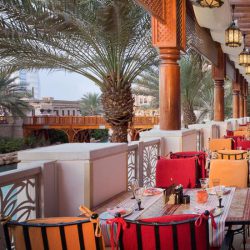
Al Hambra is a Spanish restaurant that serves fresh seafood. A menu of various paellas, tapas, calamares, tortillas, entrecotes and other distinctly Spanish specialities which you can enjoy with a nice sangria. The atmosphere of the restaurant is casual and family friendly. You can also sit outside and enjoy your meal with a tranquil view of the Madinat Jumeirah area, it’s canals and the Burj al Arab.