Amsterdam
The best places to visit in the city of Amsterdam.
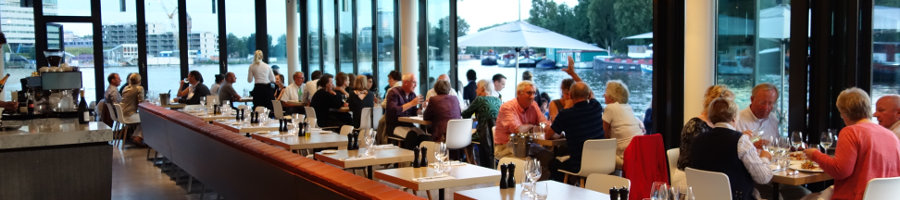
Dutch restaurants
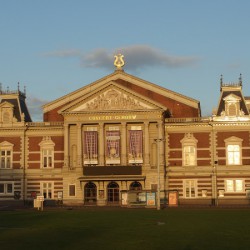
Concertgebouw
Every traveler with an affinity for culture will come across the Royal Concert Building as it’s located in the heart of the city right across Museum Square. The Royal Concert building is one of the most visited concert buildings in the world, as the building is known for its unrivaled acoustics. The inside of the building is as beautiful as the outside which makes it the most impressive music stage of Amsterdam. The Concert building is most known for it’s classical and modern performances, but other musical performances can also be experienced here. If you wish to enjoy a lasting musical impression you’re here at the right address.
As the concert building is a monumental building in the cultural heart of the city, it is worth checking the building out for the cultural citysperience. As you will find plenty of things to do, shopping streets, bars and museums nearby.
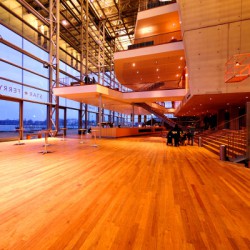
Muziekgebouw aan ‘t IJ
Amsterdam is located next to a river called the IJ. Overlooking this river you can find the Music Building at the IJ, where performances of contemporary classical music, jazz and even electronic music can be enjoyed. The main concert hall is completely modular and can be given different dimensions to achieve the right musical acoustics for each performance. All to give you the best musical experience.
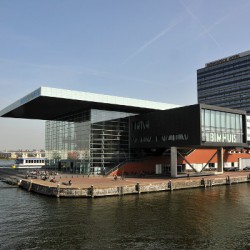
Bimhuis
The Bimhuis is the most popular stage for Jazz and improvised music in the Netherlands. Here the biggest Jazz artists come togheter to take the genre a step further. With the Bimhuis it’s no wonder that Amsterdam has always been a popular Jazz city. If you wish to enjoy the latest and greatest in Jazz, the Bimhuis is your destination for the evening.
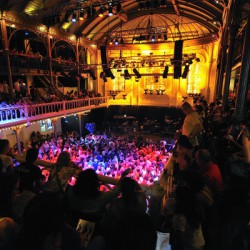
Paradiso
In the Netherlands Paradiso is called the pop temple, as Paradiso is a music venue where many well-known names have performed. The building has a Romanesque style and dates from 1879-’80. Because of it’s intimate and beautiful design where the artist can be viewed from multiple floors many artists like Nirvana, Adele, Lenny Kravitz and the Rolling Stones also recorded their concerts here. Besides it’s many pop concerts Paradiso also explores the borders of pop culture and gives stage to special initiatives and projects. Paradiso’s main hall has a capacity of 1500 visitors. It also has a smaller hall with the capacity for 250 visitors.
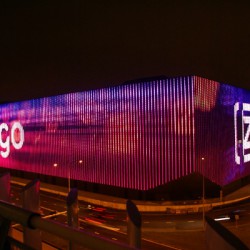
Ziggo Dome
The most visited concert hall in the Netherlands and a top 5 most visited concert hall in the world is the Ziggo Dome. The Ziggo Dome is a fairly new gigantic concert hall made for big name pop artists. MTV Europe Music Awards have been here, Taylor Swift, KISS, Neil Diamond, Eros Ramazzotti. Throughout the year you can find world famous artists here. You can’t really go wrong by giving this place a visit. The Ziggo Dome is also conveniently located next to the Bijlmer Arena metro and train station in Amsterdam, so it’s very easy to reach.
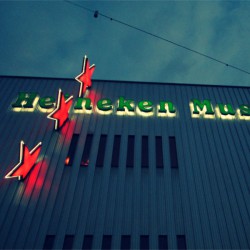
AFAS Live
AFAS Live, formerly known as the The Heineken Music Hall, is a great venue specifically designed for the acoustics of pop music. The venue has been nominated for the Pollstar awards as best international concert location on several occasions. AFAS Live can house up to 6000 partygoers in the main concert hall, making it a popular venue for big stars, dance events and music awards. Another great advantage of this venue is that it’s located right next to a metro and train station in Amsterdam, making it quite easy to reach for music lovers from all across the country.
A guide to the Red Light District of Amsterdam
The history of the Red Light District of Amsterdam
Amsterdam is well known for its red light district. The red light district of Amsterdam is not necessarily a product of modern policies, as it has a longer history than the country itself. With its location near the port of Amsterdam it has always been an interesting location for girls who wished to provide special services to sailors, soldiers and migrants who landed there. Policies of toleration followed by suppression are known to have alternated each other since the middle ages.
Where to find the red light district of Amsterdam
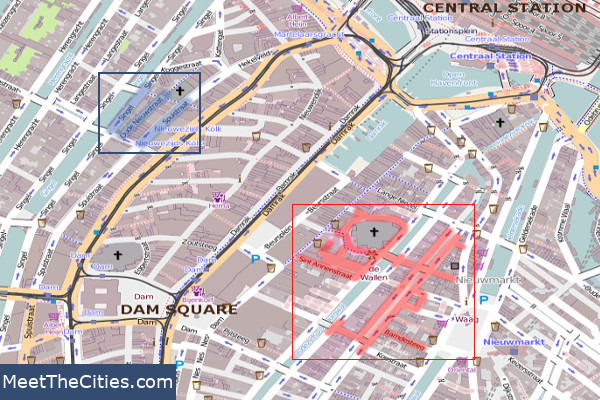
Amsterdam has three red light districts: the most famous one is called De Wallen, a smaller one is located at the Oude Nieuwstraat and a minor one at Ruysdaelkade. On our map at the bottom of this page you can find the location of the biggest two red light districts, as these are the only ones located in the city center.
Is it safe to visit the red light district?
Prostitution is legal and well regulated in the Netherlands. Additionally the city of Amsterdam takes a very pro-active stance to ensure the safety in the area for both visitors and working girls. Despite that the current legal age is 18, owners of the windows at the red light usually only rent out rooms to girls who have reached the age of 21, so they are more mature and less easily influenced. They have to make sure they are doing it out of their own free will. And the rooms always have an alarm button. The industry also takes active measures to ensure girls can get out of the industry if they want. This is all to make sure that everyone who works there also truly wants to be there.
As such it is very safe for a tourist to visit the red light district. And throughout the evening you can find tourists, locals and police walking in the area. It’s no problem to just get a drink at a bar in the area. Due to the nature of red light districts the areas mostly come alive late in the evening, so those are the best times to come and visit them. As when visiting any place abroad you should always watch out for pickpockets and street dealers.
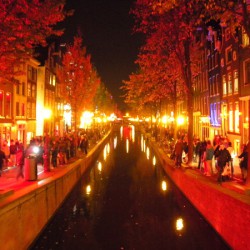
De Wallen
De Wallen, meaning the shores, is the biggest and most well known red light district of Amsterdam. This is the area you see on tv with its distinctive canals, cozy bars and red light windows. It’s a fantastic tourist attraction that you must have seen in the evening, if you truly want to be able to say that you have visited Amsterdam.
The red light district can be found around the old church called the Oude Kerk (which also means the old church). The red light district covers a wide range of canal streets and alleys around the old church all the way up to Nieuwmarkt (New Market Square). Especially in the alleys, where visitors aren’t as exposed to the public, you will find many girls trying to lure customers in from behind their windows. In this area you can find strip clubs, sex workers behind their windows, sex shops, an erotic museum and more alongside beautiful historical canals.
Unbeknownst to most tourists the red light district is also a residential area where lots of native people from Amsterdam live and many fun loving student societies are housed. Students love drinking, so in Amsterdam the area is notable for its many bars and cafes that are usually quite crowded. Add in the tourist hotels, walking tours, coffeeshops and sport bars located in the area and it’s one big chaotic area where all walks of life meet under the cover of the night and bright shining red lights.
As this is one of the older parts of Amsterdam the buildings have a very beautiful and charisteric Dutch architecture to them. Taking a stroll across the canals here at night gives you a true feel of the red light vibe of Amsterdam. The area has a warm and welcoming atmosphere. And the streets are surprisingly cozy and you can find plenty of bars in the area.
Despite that some curious tourists and locals walk here with their families, parental discretion is advised. In the red light district you will find many scantily clad women, sexually explicit images and objects in the store windows that are only meant for adults of 18 years and older.
If you are wondering where the Red Light District can be found, just head to the streets the ‘Oudezijds Voorburgwal’ and the ‘Oudezijds Achterburgwal’ in the evening, when everything comes alive, and explore the surrounding areas. The location of the red light district of Amsterdam called De Wallen can be found on the map below, where we have marked the area in red on the map.
If you want want to learn more about this historic district of Amsterdam, then you can always book a guided tour through the Amsterdam Red Light District.
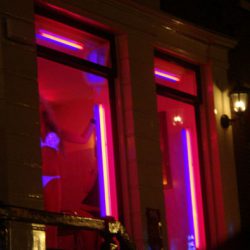
Oude Nieuwstraat
The second red light district in the city center is located at the Oude Nieuwstraat and the two streets parallel to it, which are the Singel and the Spuistraat. But there is also some activity at the Korte Kolksteeg, Korte Korsjespoortsteeg and Bergstraat.
You can expect to find windows with enthusiastic ladies at this smaller red light district, but this district is less focussed on tourism. This area around the Oude Nieuwstraat is also less crowded than the famous red light district at De Wallen. What you will find here is more low-key, aimed at offering a more discrete environment.
On the map below, of the red light districts of Amsterdam, this area is marked in blue.
What tourists should know about coffeeshops
The terminology
In The Netherlands you could get confused by the terminology surrounding coffeeshops, a coffee house and cafés. So keep the following in mind: A café, a lunchroom, a coffee house, a bar and a pub are establishment where drinks and some prepared food can be bought. A coffeeshop is an establishment that is allowed to sell cannabis for personal consumption. Although in most coffeeshops it is also possible to get non-alcoholic drinks, such as coffee and tea.
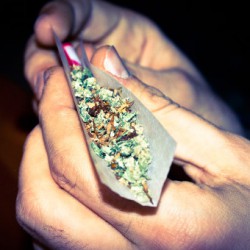
In coffeeshops in Amsterdam you can often find cannabis, weed, marijuana and hash on the menu. These terms can be quite confusing, so let us explain it a bit. The plant where all these things come from is the cannabis plant. Weed consists of the crumbled and dried leaves and flower bulbs of the cannabis plant. Weed is also often called marijuana or cannabis. So the term cannabis can actually refer to multiple things. Weed is the stereotypical green stuff you always see in movies.
Hash is the resin of the cannabis plant. It comes from the flower bulbs of the cannabis plant. Hash looks a bit like clay.
Quality of the coffeeshops in Amsterdam
According to a research from 2008 by the Amsterdams Tourisme en Congres Bureau 23,4% of the tourists in Amsterdam visited a coffeeshop. So a lot of tourists specifically go to Amsterdam to smoke cannabis in one of the most charming and liberal cities of Europe.
The quality of the cannabis that is sold varies widely, but it tends to be relatively high compared to cannabis from other countries. Dutch weed, also called Nederwiet, contains levels of THC of about 18% on average, while this is about 8% in other countries. Dutch hash, also known as Nederhasj, contains levels of THC, which is the active component of cannabis, of about 33%, while this is about 19% in other countries. This means that the cannabis could be stronger than tourists are used to, as the effects per gram could be a lot higher.
Sometimes cannabis is processed into food, like in space cakes or pot brownies. People do not instantly feel the effects of cannabis in their food. So tourists sometimes take strong doses of cannabis while waiting for the effects to occur. Tourists who decide to buy a cannabis product should ask the retailer for information on how to use it safely and in moderation.
The drug laws of the Netherlands
The purchasing, possession and use of cannabis is allowed in The Netherlands on the condition that it’s only for personal use. Be aware that possession of more than 5 grams of cannabis is illegal and punishable. It is also not allowed to drive under the influence of soft drugs like cannabis or alcohol.
The coffeeshops are allowed to sell cannabis under some restrictions. They risk closure if they sell quantities of softdrugs greater than 5 grams per transaction, if they sell soft drugs to anyone under the age of 18, if they advertise themselves or their menu, and if they sell alcohol or hard drugs.
In some municipalities of the Netherlands, near the borders of Germany and Belgium, tourists cannot purchase cannabis products at coffee shops. This is done to reduce drug trafficking to other countries. In Amsterdam these restrictions do not apply, so tourists are allowed to enter and buy cannabis at a coffee shop, but they do need to be able to identify themselves.
The Dutch laws about cannabis are quite contradictory, as coffee shops are allowed to sell cannabis, people are allowed to grow a limited amount of plants for personal use, but the mass production or import of cannabis is illegal in The Netherlands. Even supplying the stores that are allowed to sell them is quite questionable. This is because international treaties and international pressure prevent further liberalization of the Dutch laws. It is illegal for travelers to carry cannabis over the border.
In the Netherlands it is not allowed to smoke tobacco in most public places with a roof and employees. This includes under the roof of train stations, bars, restaurants and coffee shops. It is currently still hotly debated whether coffeeshops can have special smoking areas or not. That’s why people often smoke weed and tobacco on the terrace of establishments.
Locating coffeeshops on the map of Amsterdam
Amsterdam has three major nightlife centers where you can also find some of the biggest and tourist-friendly coffeeshops of Amsterdam. These are the Leidseplein (Leidse Square), Rembrandtplein (Rembrandt Square) and to a lesser extend the red light district (De Wallen). The party and nightlife activities of Amsterdam tend to revolve around these three areas and you can expect big name coffee shops there.
In Amsterdam there are over 200 coffeeshops spread out over the city, which you can recognize by the green/white license sticker they have on the window. That way you can be sure to always receive quality cannabis.
Coffeeshops are not allowed to advertise and at Meet The Cities we cannot promote any coffeeshops, but you can hardly miss the vibrantly colored coffeeshops across the city. The Netherlands has long been at the forefront of introducing liberal freedoms that have spread across the world. And for centuries people from across the world have gone to the Netherlands to enjoy those freedoms. Coffeeshops are a symbol of this. So it comes as no surprise that over the years coffeeshops have become part of the identity of Amsterdam. And chances are they will be around for a long time, in the most tolerant city of the Europe.

Comedy Café
The Comedy Cafe is founded in 1994 as a place where internationally famous comedians, upcoming artists, new talent and everything in between comes to perform. Currently they also have a fixed group of comedians. There are comedy shows performed in the Dutch and English language, so check first if there is a performance in the language that you prefer. Since January 2016 the Comedy Cafe is located in a new building with a view over the IJ river and it is now also possible to combine it with a dinner.
Stadsschouwburg Amsterdam
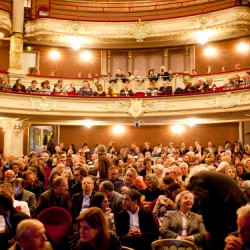
The Stadsschouwburg (municipal theatre) Amsterdam is a wonderful monumental theatre building with two halls and dates from 1894. Not only this fact makes a visit more than worthwhile but also their extensive range of national and international theatre plays, modern dance performances, music plays and drama. Every day there is a variety of different genres. A number of plays are being subtitled or performed in English. In most dancing shows there will be no language issue. In the lobby of the Stadsschouwburg houses lunchroom Stanislavski where you can enjoy lunch or dinner.
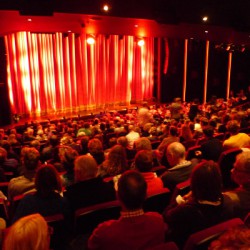
DeLaMar Theater
DeLaMar Theater is located in the heart of Amsterdam city center near the Leidseplein. The building was originally built in 1887 as a school. Nowadays it houses the impressive DeLaMar Theater and is known for its large musicals which are often also performed at Broadway. Besides the musicals the theatre offers music, dance, drama and cabaret. The theatre has two halls and are named after Mary Dresselhuys and Wim Sonneveld which were very important persons in the Dutch theatre history. These two halls have together a capacity of about 1.500 persons. We from Meet The Cities advise to take a look in the foyer at the photo collection with the theme “theatre”. Tickets are available at the theatre.
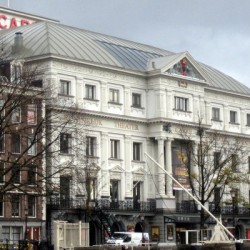
Royal Theater Carré
Koninklijk Theater Carré (Royal Theatre Carré) is located in majestic building in the Plantage area, which is in the city center of Amsterdam. In 1887 circus director and entrepreneur Oscar Carré opened the doors of his theatre at the Amstel. After its 100th birthday the theatre was allowed to call itself a “royal” theatre. Nowadays it is the most famous theatre in the Netherlands is mainly used for national and international musicals, drama, pop concerts, music- and cabaret performances and even the circus. The annual World Christmas Circus is one of their main events. The theatre has three restaurants and various foyers. Visitors can experience a complete night out with dinner before the show and a drink and a snack after the show. We from Meet The Cities will advise you to book your tickets well in advance. If you don’t feel like watching a show, but want to see the beautiful and luxury theatre it is possible to book a guided tour. There are shows and tours in the Dutch as well in the English language.
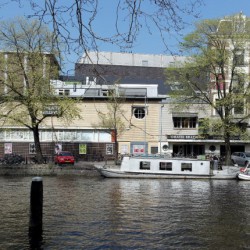
Theater Bellevue
Theater Bellevue is housed in a building on Leidsekade,which dates from around 1894. At that time it housed two societies: Concordia (only for men) and Bellevue (including for women and children). Nowadays the theatre has a three halls with the names: Grote Zaal, Klein Bellevue and Paloni Zaal. Besides their own productions there are also performances of existing companies and producers. The Grote Zaal mainly has a program with drama, musicals, dance, comedy, mime and (children’s) theatre. In Klein Bellevue new talent gets the chance to perform their shows and arts. In the Paloni Zaal are for over 25 years unique performances that are the length of a lunch break. It is also possible to have a lunch or dinner in their café restaurant De Smoeshaan.
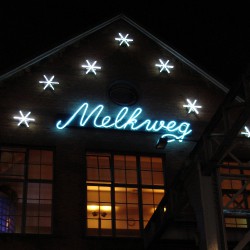
Melkweg
The Melkweg (The Milky Way) was originally a sugar- and later on a milk factory located near the Leidseplein. In 1973 it opened as a cultural centre and had many changes since then. Nowadays the venue has six halls of which three are concert halls, a cinema, a theater, and an exhibition space. Yearly the Melkweg attracts over 400.000 visitors, but still manages to keep an intimate atmosphere. In the three concert halls are weekly different music events. Famous and less famous artists, bands and DJs perform over here. The programming has always been very diverse and embraces all music styles from punk to hip hop and from grunge to dance, so there are always performances scheduled that you will like.
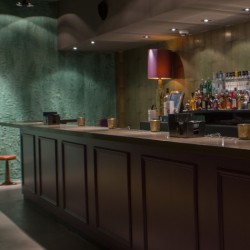
Club ABE
ABE Club & Lounge is an exclusive and high-end club located in a former bank building near the Rembrandtplein. It consists of a lounge area and a club area with two VIP decks. The bartenders are very friendly and prepare delicious drinks.
While the lounge with an island bar is perfect for a cocktail or glass of wine to start the evening, you find yourself in the club area in a completely different world; one that reminds you of the magical high-end nightclubs in foreign cities like Miami, New York or Barcelona. The club is not only open at Saturday, but also at several weekdays. Please note that the club has a door policy and that you have to dress well and/or fashionable to get into the club.
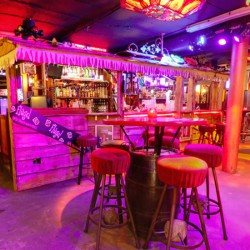
Jantjes verjaardag
Jantjes verjaardag, or Johnny’s birthday in English, is a well-known club in Amsterdam as it already exists for over 25 years. When you come to Jantjes verjaardag you will experience one big party with a lot of happy music and alcohol. This is probably not the best nightclub in Amsterdam, but it absolutely belongs on this list because this discotheque has all the ingredients to bring you and your friends a great night out with a lot of fun.
This party cafe is one-of-a-kind in Amsterdam and has three different themed areas, but all feel a bit like a birthday-, carnival-, brown café-, student- and apres-ski party mixed together. Their capacity is over 600 party people, so try to imagine how big this “birthday” party becomes when the club gets full.
The music that is played ranges from sing along songs, German schlager music, dance music and reggaeton to international party hits and even Dutch singers that come here to perform live. These live performances and the happy party music attracts relatively young local students, but also some curious tourists that like to join the Amsterdam birthday party. From Thursday to Saturday there are various themed party nights. At most of these evenings is the entrance for free when you come in early.
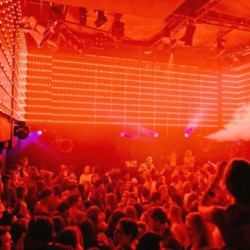
Club AIR
Club AIR is a really popular nightclub in Amsterdam. According to the British newspaper The Guardian belongs Club AIR to the top 25 of the best clubs in Europe and according to the DJ Mag top 100 clubs ranks Club AIR 30th in 2016.
The nightclub has an international look and feel and has five different bars, each with their own design and atmosphere. The management of Club AIR keeps investing in the club and offers its guests a great night out with excellent audio from the state-of-the-art sound systems and great visual attractions from of the lightings and an impressive LED wall. The club is pretty large with a maximum capacity of 1300 party people, but it has managed to create very friendly, intimate and warm atmosphere. Club AIR has a varied program, from hip hop to house music and welcomes different crowds. Each evening is unique and has different DJs.
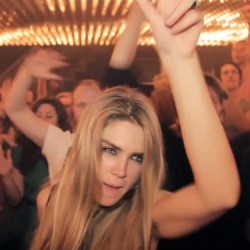
Jimmy Woo
Jimmy Woo is a relatively small, but extremely popular hotspot nightclub that is known for its luxurious style. This exclusive club is considered to be one of the best clubs in Amsterdam and is often visited by artists and other celebrities that come to Amsterdam. People come not only to the Jimmy Woo to party, but also to see and be seen.
The club has two floors. Upstairs is an Asian styled bar and downstairs is the club where many of the best DJs have performed. Once you’re inside you will not only be impressed by the interior of the club but also by its sound system, the ceiling panel with about 12.000 lights, the Asian antiques and gold leaf covered walls. The cocktails, exclusively made for Jimmy Woo, make the perfect luxurious night out complete. The queue in front of the entrance can become large and the selection at the door very strict, so make sure that you dress to impress. Ways to secure your entrance are a table reservation or getting on the guest list.
Sugarfactory
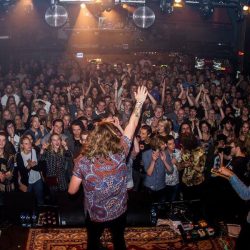
As its name suggests was the Sugarfactory once a sugar factory. But since 2005 is it an independent venue for a great night out as it is used as a nightclub and as a stage for live music venue events (blended with art, theatre and culture). Sugarfactory is conveniently located in the historical city center of Amsterdam near the Leidseplein where also many other nightlife activities take place.
The venue has a main hall and a more intimate area where music events can be held, and for its guests that smoke does it also have a small smoking lounge. The maximum capacity of the venue is about 700 guests at club nights and about 550 guests when there are live music events. The atmosphere is intimate and very open-minded and the venue offers a stage to upcoming national and international DJs and bands. Sugerfactory is open 7 evenings / nights a week and hosts over 600 events per year. During weekdays every night will be themed in a different music genre like a techno-, r&b-, rock- or jazz night with low (or free) entrance fees. So whatever your taste may be there is always a night in the week where you can party on your favorite music until the early morning hours.
Bitterzoet
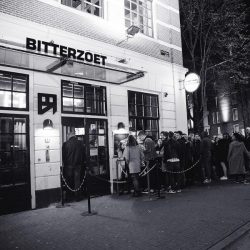
Bitterzoet, or Bittersweet in English, is a spot used as a nightclub and as a live music venue. The club is centrally located at only a short walk from Amsterdam Central Station, which is convenient for visitors that make use of the public transport.
Although this club is relatively small with a maximum of about 350 people, Bitterzoet deserves a spot in this list with the best nightclubs in Amsterdam as the club has a real warm welcoming and intimate atmosphere that you need to experience. The club has downstairs the main bar, a dancefloor, a stage with a DJ-booth and leaded glass windows, while upstairs you will find a more cosy bar and a theatre podium.
The themes and performances at Bitterzoet differ from upbeat house DJs to small intimate concerts and from stage diving rough punk bands to relaxed reggae bands. Not only the well-known artists, but also underground, subculture and upcoming artists get a stage here to perform and showcase their skills. The club has also done some entertaining collaborations with the Amsterdam pop temple Paradiso.
Bitterzoet is unique in the way that it does not have a fixed weekly program, but offers a different program every day. This is also why Bitterzoet also attracts a wide range of young unique party people with a creative fashion style. The club is open 7 days a week and entrance fee is relatively low, especially during weekdays.
‘t Smalle
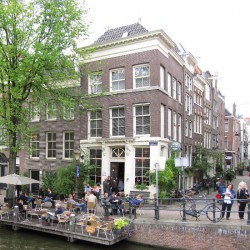
Café ‘t Smalle was a Hoppe distillery in 1780. Nowadays it is a cozy old brown cafe located near the Anne Frank House and has wooden barrels above the wood-paneled mezzanine bar, and vintage brass furnishings. If you had some beers and got a little hungry you could order the tasty Dutch snack called bitterballen. But when you had a coffee we would recommend a slice of Apple Pie. Particularly beautiful is the waterfront terrace on one of the prettiest canals of Amsterdam which is open during summertime. Needless to say that the waterfront terrace is always packed with good weather.
Cafe Gollem
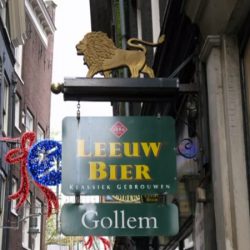
Café Gollum is a typical brown cafe with much character. It is founded in 1974 and has nowadays four locations in Amsterdam. They have a cozy atmosphere where everybody talks to everybody no matter if you are a local or a tourist. What makes them unique is their large selection of Belgian and other international beers. The cafes at Raamsteeg 4 and Amstelstraat 34 have a selection of 200+ different beers. The friendly bartenders are well informed and willing to give you some advice which beers you should try.
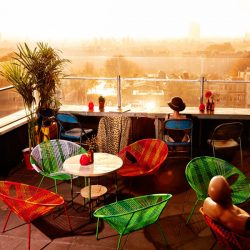
Canvas
Canvas stands as a chic rooftop bar, restaurant and club on the 7th floor of the Volkshotel, south-east of central Amsterdam. During the day the rooftop terrace offers a beautiful view over the city. Having a blue bar as the showstopper, the spot offers an ever changing menu with toothsome starters. Canvas is a great place to settle down at for a yummy lunch or a memorable late night dinner, while the guests enjoy the amazing views on all sides. On friday and saturday night Canvas turns into a club that hosts numerous events and DJs.
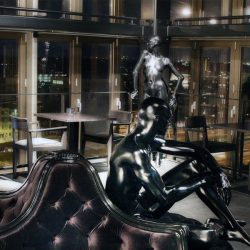
SKYY Bar
Near the World Fashion Center on the 10th floor of the WestCord Fashion Hotel sports this ultra lively and extremely chic bar that’s largely adored for its marvellous city views and over a dozen drinks. Large windows and glitzy elements mark the decor, while weekends are brightened up with resident DJs.
Beginning right from the most classic cocktails, the place also offers in-house blends, such as Skyy is the Limit which is a sweet and sour mix of citrus vodka with lemon juice and strawberry, combined with sugar. Another one is The Wake Up Call that blends genever with butterscotch liqueur, some espresso and hazelnut syrup. The cocktails can be supplemented with Dutch and Asian delicacies, including mini Wagyu burgers, tiger prawns, traditional Dutch bitterballs, and sweet vegetarian mini spring rolls.
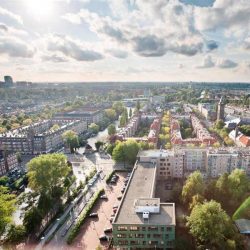
Twenty Third Bar
The Twenty Third Bar is a luxurious skybar, notable as it’s also one of the highest ones. Located on Hotel Okura’s 23rd floor, the spot offers a sparkling 180 degree night view of Amsterdam and a splendorous day-time meal with a fun-filled ambiance. The modern interior with subtle shade of blue and tiny lights above the bar make the place absolutely eye-pleasing to look at. Order yourself classic martinis and daiquiris, or some wonderful drinks from the stylish cocktail menu, while you can also select from 17 different champagnes and wines. As a bonus you can satisfy your food cravings with a range of decadent snacks offered by the great chefs of the michelin awarded Ciel Bleu kitchen next door.
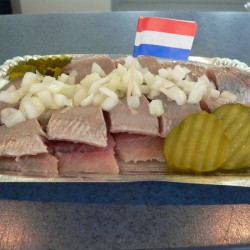
Raw herring
One of the biggest culinary traditions of the Netherlands is picking up a raw herring by it’s tail with your hands, holding it up above your head and then lowering it into your mouth to eat it. If you prefer to keep your hands clean you can eat raw herring on a bun with onions and pickles. An awesome recipe for a healthy snack. When you’re in Amsterdam you can partake in this tradition at one of the many fish shops, street vendors and fish stands across the city.
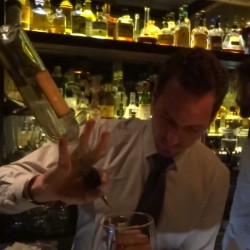
Vesper bar
The Vesper Bar is a small but stylish bar where you can enjoy delicious cocktails prepared by top bartenders. Vesper is the name of the Bond girl where the bar has derived its name from. Their cocktail menu includes many classic cocktails, but also some beers and wines. Because of its location, which is right in the heart of the charming Jordaan area, it attracts many local people from Amsterdam. Please note that this cocktail bar opens late in the evening.
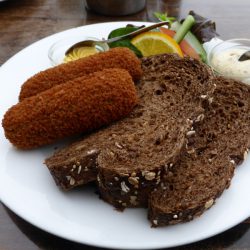
Kroketten
Kroketten are a bigger version of the bitterbal. It’s a fried snack of beef ragout that’s usually eaten with mustard. Often next to a portion of fries with mayonnaise or peanut sauce. You can find them in fast food restaurants which Dutch people call snackbars. In lunchrooms it’s often eaten on a sandwich with mustard. Even the Dutch McDonalds have their own version of a kroket with mustard on a bun called the McKroket.
Kroketten are one of the universally loved foods in the Netherlands and they are widely available, so at Meet The Cities we recommend you give this delightful little treat a try as well.
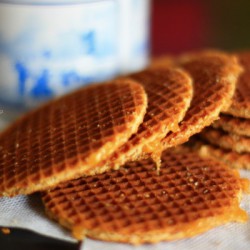
Stroopwafels
A stroopwafel is a typically Dutch waffle with syrup. They are a treat that can be eaten on every occasion. It can be eaten warm and cold. They are also sold as waffle crumbs in a bag. You can find stroopwafels on most markets, bakeries, supermarkets and often in touristic cheese shops. In the Netherlands people usually eat them as a quick snack. When someone comes to visit at a Dutch home they can expect a stroopwafel with a cup of coffee or tea as well.
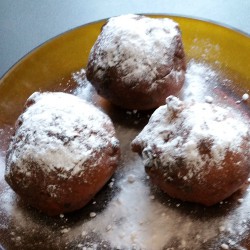
Oliebollen
Dutch people like baked products almost as much as cheese products. The oliebol is a fried doughy ball sometimes filled with raisins. It’s eaten warm and usually covered with powdered sugar. The oliebol can be seen on centuries old paintings and they say the oliebol is what inspired the creation of the doughnut. The name oliebol means oil ball. It’s eaten during festivities and sold at market stands, usually during the colder seasons.
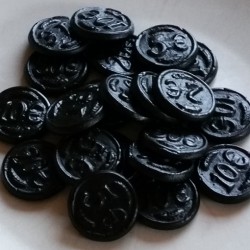
Licorice
The Netherlands is the biggest producer of licorice confectionery in Europe. Just like in the Nordic countries licorices are very popular in the Netherlands. Especially the salty and salmiakki ones. It’s not exactly street food, but they sure are eaten everywhere. People have them in their cars and at home. The licorices tend to be fairly salty, which can be an acquired taste. The most common place to find salty and salmiakki licorices are the supermarkets.